We went to Washington for three national parks. The moment we keep coming back to is jumping off a Lake Crescent dock.
We’re an ordinary Midwestern family trying to use these years with our kids well. From August 3–12, 2026, we rented a minivan and looped from Seattle through Mount Rainier, Olympic, and North Cascades, then back to Seattle: nine nights and ten calendar days.
There were mountain trails, mossy forests, tide pools, early alarms, and plenty of Costco snacks. We completed Cascade Pass together, with a little carrying along the way. At Rainier, a proud-parent speech became an argument for unlimited candy.
Olympic became our favorite stretch. The lake mattered. So did an unplanned stretch in Port Angeles that reminded us how much we like having time to wander. We would absolutely return to the Port Angeles area and Mount Rainier. In fact, we already have another trip booked for next year.
Here’s how the trip unfolded, what worked for our family, and why we’re going back.
Jump to: Route at a glance · Mount Rainier (Days 1–2) · Olympic (Days 3–6) · North Cascades (Day 7) · Seattle (Days 8–10) · What worked · Where we stayed · Before you go: current conditions
Our route at a glance
| Dates | Overnight base |
|---|---|
| August 3–5 | Paradise Inn, Mount Rainier — two nights |
| August 5–6 | Kalaloch Lodge, Olympic coast — one night |
| August 6–8 | Lake Crescent Lodge — two nights |
| August 8–10 | North Cascades Inn — two nights |
| August 10–12 | Embassy Suites Downtown Seattle — two nights |
We traveled with our three kids, ages 5, 8, and 11 at the time, in an Enterprise minivan. Grocery stops helped keep the trip manageable. Working together on Junior Ranger books became part of how we spent time together. Staying in the parks was part of the experience, especially at Lake Crescent.
Use the overnight route as a starting point and leave room for your family’s pace. Trails, smoke, tides, and ferry schedules can all change the day.
Our park pages for this loop: Mount Rainier, Olympic, and North Cascades. Each has the official National Park Service Junior Ranger and park map links.
Day 1: Seattle to Mount Rainier
We flew into Seattle in the morning, picked up our Enterprise minivan, and made a Costco stop before heading to Mount Rainier.
We visited Sunrise that arrival day. There was a lot of wildfire smoke—a real part of our visit, even if it wasn’t what we’d pictured when planning the trip.
We spent the night at Paradise Inn, our base for two nights.
Day 2: Skyline, Myrtle Falls, and a candy loophole
Before Skyline, the kids ate Costco pastries. We packed plenty of snacks—too many, actually: granola bars, apples, cheese, and chocolate.
We started clockwise around 7 a.m. There were a few other people out, but not many. We saw deer right away, and the early light lit up Mount Rainier beautifully. We spotted goats near the top and a bear on the way down.
In our experience, the crowds tend to pick up around 10. The quieter start and beautiful light were good reminders of why early mornings work for our family. The wildlife sightings were a bonus, not something we could have scheduled.
We also visited Myrtle Falls and stopped at the Henry M. Jackson Visitor Center for badges. Finishing Skyline was a big moment for us. When the kids got tired, we stopped for a break and snacks. I carried our five-year-old on my shoulders for a bit, too. My advice to other parents is pretty simple: pack snacks, take breaks, and enjoy it.
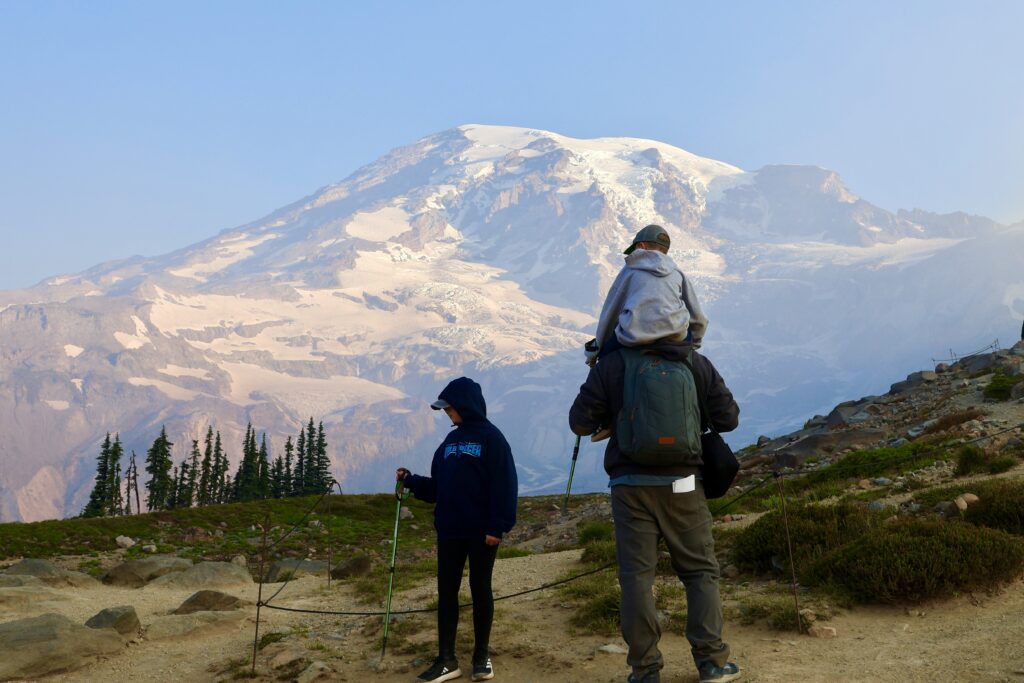
After Skyline, I said something along the lines of, “If you can climb a mountain, you can do anything.”
Later, when candy was refused, one of the kids pointed out the obvious problem: “But you told us we can do anything.”
Fair point. We did not adopt an unlimited-candy policy, but the argument has outlasted the hike.
River play afterward was a good way to recover. Our practical tip from that stop: have river shoes ready from the beginning.
Day 3: From Rainier to the Olympic coast
We left Rainier for a night at Kalaloch Lodge, where we stayed in a two-bedroom duplex.
Creekside time and Ruby Beach changed the pace of the trip. After the mountain hiking, we had the coast: tide pools, sea stacks, and sunset.
One night gave us a taste of this side of Olympic before we moved inland.
Day 4: The Hoh Rain Forest and Lake Crescent
We visited the Hoh Rain Forest, including the Hall of Mosses and Spruce Nature Trail, before moving to Lake Crescent Lodge for two nights.
The forest was one of the places that made Olympic feel so different from the rest of the loop. Mountain views had brought us to Washington, but the moss and water were making a strong case for more of our time.
Lake Crescent Lodge became our favorite base of the trip.
Day 5: Waterfalls, tide pools, and the best memory
Our Olympic stops included Sol Duc, Salmon Cascades, Ancient Groves, Salt Creek’s tide pools, and Madison Falls.
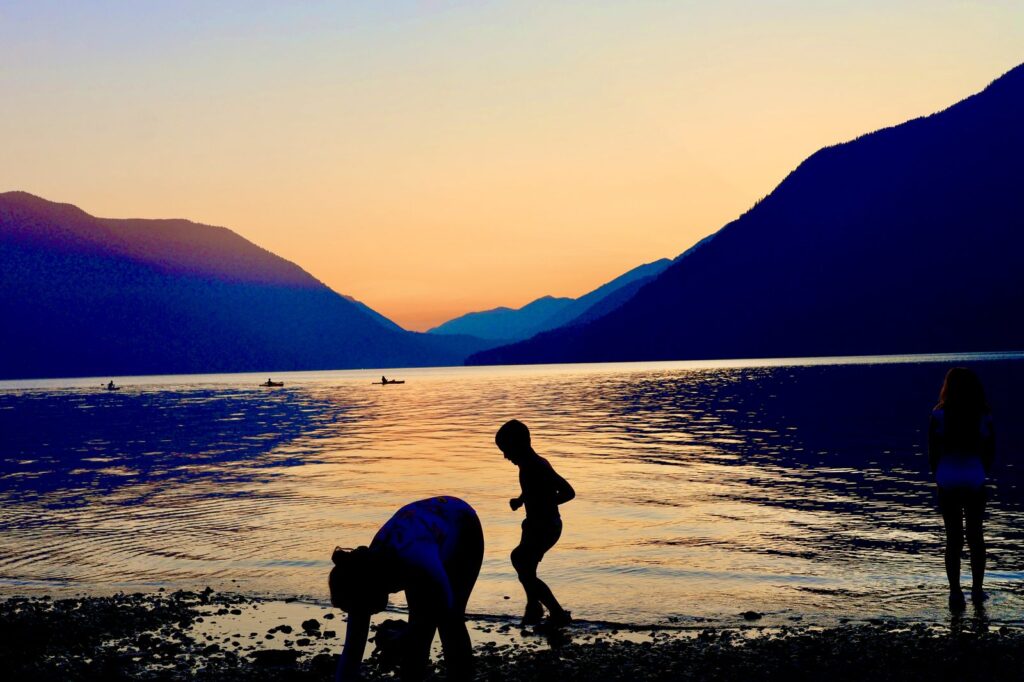
The moment that stayed with us was jumping off the dock into Lake Crescent.
Our family’s daredevil went first, excited to get in. I followed and only then realized how cold it was. I was sore from hiking, and the cold water felt good. Of everything we did on this trip, that swim is the memory I keep coming back to.
For anyone planning their own lake time: check conditions and posted rules, supervise children closely, and remember that cold water can be hazardous even on a warm day.
The other surprise was Port Angeles. We spent time at Swain’s and ate at Midtown Public House, which we would happily return to. That unplanned town stop became one of our favorite parts of the trip.
It’s easy to give every available hour to the next park attraction. This was a useful reminder that a meal and some browsing can belong in the trip just as much as another trail.
Day 6: Leaving Olympic
We visited Hurricane Ridge, Marymere Falls, and the Olympic Visitor Center before continuing toward North Cascades, with a grocery restock along the way. We took the ferry from Port Townsend and loved the crossing.
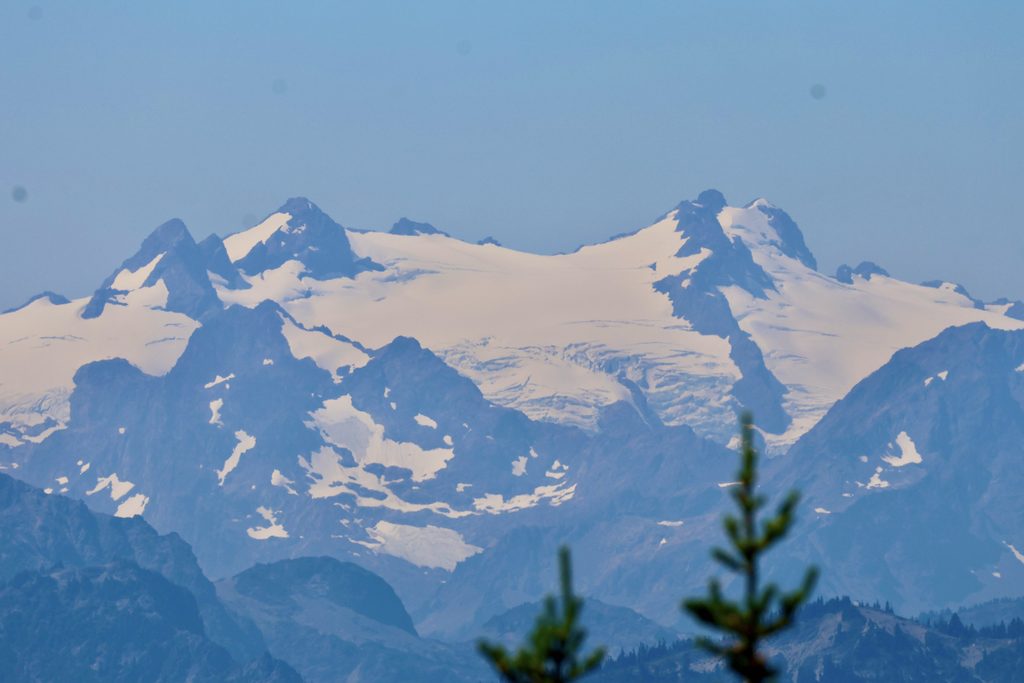
This was a full transfer day. We’d keep any stops flexible around the ferry rather than count on fitting all of them in.
We spent the next two nights at North Cascades Inn.
Day 7: Cascade Pass, together
We left our room bright and early for Cascade Pass. The drive itself was memorable: several miles of steep gravel road on the way to the trailhead.
We chose Cascade Pass because we wanted to hike inside North Cascades National Park itself. It was the only time on this trip that we were inside the park’s boundaries.
We completed the hike together, with occasional carrying for our youngest. The views were beautiful, and finishing it as a family deserves its place among the trip’s best moments.
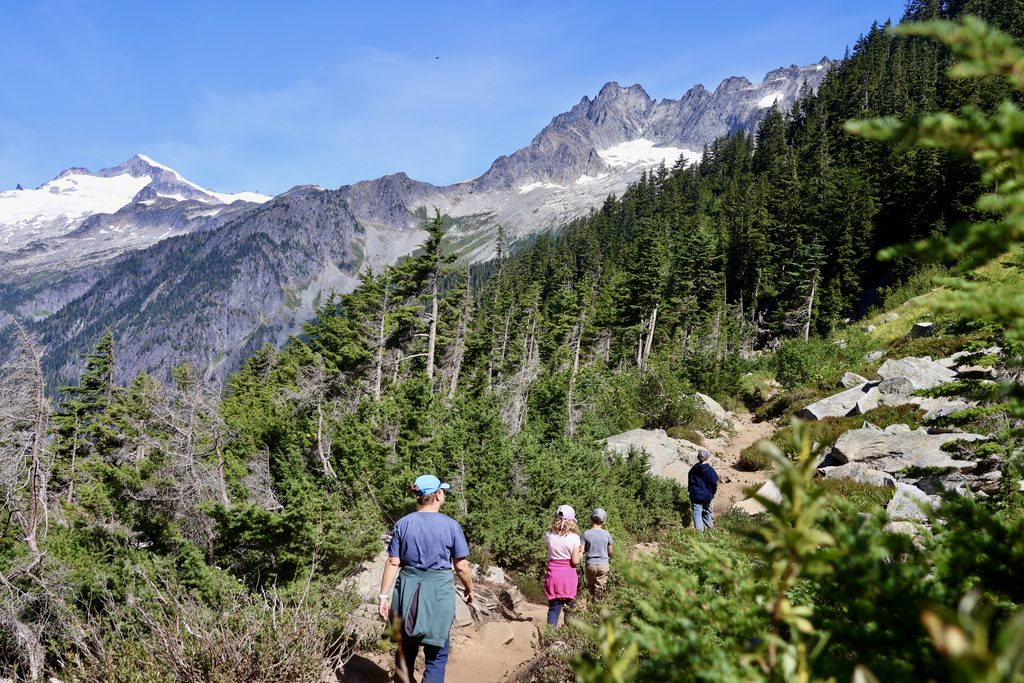
North Cascades felt hot and dry to us on this visit, but Cascade Pass gave us beautiful views and something we accomplished together. Looking back at the trip as a whole, we wouldn’t change it.
Day 8: Back to Seattle
We headed to Seattle and checked into Embassy Suites Downtown for two nights.
Our stops included a Dambo troll and Ballard Locks, followed by laundry and pool time.
The laundry-and-pool part deserves its place in the itinerary. After a week of park travel, a reset was useful.
Day 9: A Seattle day
We visited Pike Place, the Space Needle, and took the Bainbridge ferry.
Seattle gave the trip a different finish after all the lodge nights and early trail starts. We were still exploring, just with a different kind of view.
Day 10: One last stop, then home
We visited Klondike Gold Rush National Historical Park, made a final Costco stop, and flew home that evening.
Nine nights had given us three parks and time in Seattle. We came home with places we wanted to return to and memories we were glad we’d made now.
What worked for our family
Early starts, then room to slow down
Skyline showed why we like getting out early: fewer people at the start and beautiful morning light. We also valued the quieter parts of the trip afterward—river play, the lake, a meal in Port Angeles, and time to browse.
Snacks and breaks count as hiking strategy
We packed more snacks than we needed for Skyline, but we used breaks and food when the kids got tired. Sometimes our youngest needed a ride on my shoulders. That was part of doing the hike as a family.
Pack snacks, take breaks, and leave room to enjoy being there.
Junior Ranger books gave us something to do together
The badges mattered, but so did working through the books together. Being unplugged shaped this trip. We were able to reset in nature and enjoy each other’s company.
We keep NPS Junior Ranger booklet links, including all three of these parks, on our Junior Ranger page.
Use the booking tools that work for the trip
We used Chase points to book our flights and our Embassy Suites stay in Seattle. Our expense sheet records 250,784 points for the flights and 86,856 points for two nights at Embassy Suites: 337,640 points altogether.
We booked the rental through Costco Travel for $878.17, the best rate we could find for this trip. These are our actual booking figures, not a promise about what the same trip would cost another family.
That’s separate from the Costco grocery stops that kept the van supplied with pastries, snacks, and staples. Both were useful, in different ways.
Keep river shoes handy
After Skyline, river play was a win. River shoes would be in our kit from the start on another trip.
Leave room for conditions
Smoke affected our Rainier visit, and we still came home glad we’d gone. On another trip, we’d leave ourselves room to change the hiking plan. Check AirNow’s smoke guidance and current air quality; our enjoyment of the visit isn’t a measure of air safety.
Where we stayed
We’d book all five places again.
| Stay | Our takeaway |
|---|---|
| Paradise Inn | We liked having two nights at Rainier. |
| Kalaloch Lodge | Our two-bedroom duplex worked for the coastal overnight. |
| Lake Crescent Lodge | Our favorite base of the trip, and the stay we’d protect first. |
| North Cascades Inn | A place we’d use again, and our base for Cascade Pass. |
| Embassy Suites Downtown Seattle | A useful city finish with laundry and pool time. |
For a family of five, the exact room setup matters. We carried an air mattress on this trip; that isn’t a substitute for checking a property’s occupancy rules and what your particular room allows.
What we’d repeat
Midtown Public House in Port Angeles. This is the meal stop we would deliberately build into another visit.
A grocery run near the beginning. It wasn’t glamorous, but having snacks and staples in the van helped.
Park activity booklets and badges. They gave the kids something of their own to follow through the trip.
Time by the water. The lake and the post-hike river play weren’t extras we needed to squeeze in. They were part of what made the vacation good.
Along with river shoes, our useful basics included hoodies, rain gear, refillable water bottles, and plenty of snacks.
Why we’re going back
Honestly, we wouldn’t change a thing.
We would absolutely repeat the Port Angeles area and Mount Rainier. We already have another trip booked for next year.
The kids tackled real hikes, we worked together on Junior Ranger books, and we had time to reset in nature. There was a cold lake swim and a mountain-to-candy argument we’re still laughing about. Those are good reasons to keep making room for trips like this while we have these years together.
We’re sharing more of our family’s trips to parks, ballparks, and wild places at Wild Base Family—along with the practical details that helped us make them happen.
More photos from this loop are on our Photos page.
Before you go: current conditions (checked October 7, 2026)
Everything above is from our August 2026 trip. This section is different: current notes we checked on official National Park Service pages on October 7, 2026. Conditions change, so confirm on the linked pages before you go.
- Mount Rainier: $30 per private vehicle for seven days, or an America the Beautiful pass, and the park does not accept cash. NPS says timed-entry reservations are not required anywhere in the park in 2026 (Fees & Passes, updated Sept. 1, 2026). Sunrise Road is closed to private vehicles for the rest of the 2026 season because of the Wonderland Complex fires; it is open to pedestrians and bicyclists only (Alerts & Conditions, updated Sept. 24, 2026). Paradise Valley Road is scheduled to close Oct. 19 and Stevens Canyon Road Oct. 26 (dates subject to change), and all vehicles must carry tire chains Nov. 1–May 1 (Road Status, updated Sept. 28, 2026).
- Olympic: $30 per private vehicle for seven days, or an America the Beautiful pass; cashless (Fees & Passes, updated Dec. 19, 2025). Hurricane Ridge Road is open to Hurricane Ridge, but the area is staffed only intermittently, has limited services, and has no potable water during 2026 utility construction. The Elwha road is closed to vehicles at the Madison Falls parking area, which is open. In summer, NPS recommends arriving at the Hoh Rain Forest before 8 a.m. or after 5 p.m. to avoid entrance waits of up to two hours (Alerts & Conditions, updated Oct. 4, 2026). Hurricane Ridge Road can open or close with weather (Road Conditions).
- North Cascades: No entrance fee (Fees & Passes, updated June 9, 2026). NPS lists State Route 20, the North Cascades Highway, as open and says snow usually closes it sometime in late November or early December until April or early May; check WSDOT before you drive (Road Conditions, updated July 3, 2026). Cascade River Road to the Cascade Pass trailhead turns to rough gravel after about mile 10; vehicles over 22 feet or towing trailers are prohibited inside the park, and parking fills quickly from mid-July through early October (Cascade River Road, updated May 4, 2026). The North Cascades Visitor Center’s 2026 season ended Sept. 27 (Operating Hours), and some backcountry trails and camps are closed because of fires (Fire Closures, updated Oct. 6, 2026).
- Passes: The same NPS fee pages list a free 4th Grade Pass for US fourth graders and an $80 America the Beautiful annual pass for US residents.
Planning your own loop? Check current conditions at Mount Rainier, Olympic, and North Cascades. Use Olympic’s tide guidance for coastal outings and check your sailing with Washington State Ferries. Our August stops and lodging choices are a trip report, not a guarantee of future access or availability.